My mother has spent the last three decades polishing crystal wine glasses every Sunday morning like she’s maintaining the family silver. Twenty-three glasses, each one worth more than the used Corolla I drove in college, each one held up to natural light as if they were diamonds requiring inspection. I used to think it was about cleanliness. Now I understand it was about something deeper—tangible proof that the Radford family had arrived, that we were the kind of people who owned objects requiring white gloves and insurance riders, that we mattered in the specific way her world understood mattering.
My name is Kaylee Radford. I’m forty-two years old. And for the past nineteen years, I’ve been serving as a United States Marine—currently holding the rank of major with security clearances so high that mentioning them violates federal regulation.
My family has absolutely no idea.
When I First Tried to Tell Them
It wasn’t supposed to be a secret. When I enlisted at twenty-three, fresh out of college with a degree in international relations that my father had called “unemployable,” I told my family directly. I sat them down at the dinner table and explained that I’d been accepted into officer commissioning, that I would be in the intelligence division, that this was what I’d decided to do with my life.
My mother cried—not tears of pride, but tears of disappointment, like I’d announced I was joining a traveling circus instead of serving my country. My father asked if I’d considered “something more appropriate,” as if leadership and service were somehow inappropriate for a woman from our background. My older brother Preston—three years into what would become a lucrative career at a boutique investment firm in Manhattan—laughed out loud.
“The military,” he said, swirling his scotch like a character in a movie about men who made decisions. “Jesus, Kaye. Mom and Dad are going to have to tell people you’re finding yourself or something.”
I should have corrected the assumptions that followed. I should have explained, with absolute clarity, that I wasn’t just enlisting as enlisted personnel—I was commissioning as an officer. That my unemployable degree was exactly what military intelligence wanted. That I’d been accepted into a competitive program that would shape the rest of my life.
But something stopped me.
Maybe it was the look on my father’s face, that expression of barely concealed embarrassment, like I’d announced I was joining something beneath the family’s station. Maybe it was the way my mother immediately started talking about when I came back and got this out of my system, as if I were running away rather than running toward something. Or maybe I was curious—curious about how long my family would maintain a fiction that required ignoring every piece of evidence in front of them.
Nineteen years, as it turned out.
The Pattern Begins
The first few years, I tried to bridge the gap between my reality and their delusion. I came home on leave in full dress uniform, ribbons and rank visible, standing there like a walking statement that this wasn’t a phase. My mother would kiss my cheek and say, “You look so official, honey,” in the same tone she used when my nephew dressed as a policeman for Halloween. My father would ask how the “training” was going, as if I were perpetually in boot camp rather than managing complex operations. Preston would make jokes about mess-hall food and ask if I’d learned to make my bed with “hospital corners” yet.
After my first deployment to Iraq, I returned home wearing a Bronze Star. I mentioned it once at dinner, offhand, the way soldiers do when they’re uncomfortable with recognition. My father said, “That’s nice, dear,” then spent the next twenty minutes talking about Preston’s promotion to senior analyst at the firm.
After my second deployment, I stopped trying.
I developed a system. When my family asked what I did, I kept it deliberately vague: security consultation, government contract work, or sometimes, if I was feeling particularly honest and they weren’t really listening anyway, I’d say I traveled a lot for work. They filled in the blanks themselves, creating a narrative that fit their worldview perfectly. Their daughter—the perpetual disappointment, bouncing between odd jobs, never quite settling down, never quite measuring up to the brother who’d made the right choices.
The irony was almost poetic. While Preston analyzed market trends from his corner office in Manhattan overlooking Central Park, I was briefing generals on tactical operations. While my father networked at country club dinners, I was coordinating joint operations with allied forces. While my mother volunteered at charity galas to maintain our family’s standing in Seattle’s social circles, I earned the respect of seventy-three Marines who would follow me into hostile territory without hesitation.
But at family gatherings, I remained the joke. The black sheep. The one who never found her path.
“Kaye does something with computers,” my mother would say vaguely at parties, which was technically true if you counted classified communication systems and encrypted briefing networks.
“She’s very independent,” my father would offer, which was code for unemployable, unmarried, and somehow still a disappointment despite her accomplishments.
“Still figuring things out,” Preston would add, wearing that sympathetic smile that made my teeth hurt.
The Pet-Sitting Incident
The whole pet-sitting situation started as a genuine favor. My elderly neighbor, Mrs. Chen, needed someone to check on her two cats while she visited her daughter in Florida. I had a two-week leave stretch with nothing planned beyond reading and sleeping in my own bed. I liked cats more than I liked most people, so I said yes.
Mrs. Chen insisted on paying me. I declined, preferring to keep it simple. She insisted more firmly. I accepted fifty dollars to keep the peace and because, honestly, the gesture meant more to her than the money meant to me.
Somehow—and I’m still not entirely sure how—my mother heard about it.
The revelation came at Easter dinner, a family gathering designed primarily so my mother could show off her ability to produce an elaborate meal and my father could talk about his golf handicap.
“Kaye’s pet-sitting now,” my mother announced, her voice pitched bright in that particular way that indicated she was mortified. “Isn’t that sweet?”
“It’s a favor,” I said, cutting into the lamb with more force than the meat required. “One neighbor. One time.”
“Of course it is, honey,” my mother said, patting my hand with the kind of condescension reserved for adults speaking to well-intentioned children. “And it’s wonderful that you’re so flexible. Not everyone can transition between jobs so easily.”
Preston’s wife Melissa—who had never quite managed to hide her belief that I was beneath the family’s standards—leaned forward with aggressive sympathy. “You know, Kaye, if you ever want me to look over your resume, I’d be happy to help. The job market is tough, but there are always opportunities for people willing to start at the entry level.”
I was thirty-nine years old. I had just returned from leading a crisis response team in Syria. I commanded seventy-three Marines. My security clearance was so high that even discussing it in broad terms was technically federal violation.
“That’s very kind of you,” I said, smiling with enough teeth to qualify as bearing them. “Really generous.”
“Kaye,” my father said sharply, his tone suggesting I was being ungracious. “Melissa is trying to help.”
“Of course she is,” I agreed. “Everyone’s always trying to help me.”
The conversation moved on, as it always did. It always did because my family had become expert at redirecting when uncomfortable truths approached.
The pet-sitting comment, however, became a running joke.
My mother mentioned it to her friends with a brave smile at charity events. My father shook his head sadly when asked about his children by colleagues. “My son’s in investment banking, very successful,” he’d say. “My daughter is… finding her way.” Preston started introducing me at his work functions as his sister who was “between things,” a phrase that somehow managed to be both vague and devastating.

The Dinner at Cristallo
The breaking point came in November, though it didn’t break immediately. It accumulated like a crack slowly spreading through glass.
Preston called on a Tuesday afternoon, his voice carrying that specific tone of controlled excitement mixed with nervousness.
“I’m getting promoted to director of investment strategy,” he said. “Bington himself is hosting a dinner to announce it. That new place in Tribeca. Michelin star. Partners, senior management, select clients.”
Keith Bington. The CEO of Whitmore and Associates. Preston spoke his name like a prayer.
“It’s called Cristallo,” Preston continued. “He said to bring family. So… you should come.”
I should have said no. I had a briefing scheduled for that week, a security assessment that would require days of preparation and strategic thinking. But something in Preston’s voice—performative casualness layered over genuine nervousness—made me pause and reconsider.
“You want me there?” I asked, and I heard the disbelief in my own voice.
“You’re my sister, Kay,” he said, his tone suggesting this should be obvious. “Of course I want you there.” He hesitated, and I could hear him gathering courage. “Look, I know we give you a hard time about the career stuff, but this is important to me. Will you come? Wear something nice, okay? This is a high-level crowd.”
I told him I’d see what I could do—not quite a yes, but not a refusal either.
It became a yes.
I rescheduled a meeting I had no business rescheduling. I called in favors from colleagues who understood the importance of family but couldn’t quite hide their confusion at why I was prioritizing this. I worked twenty-hour days to ensure my deputy could manage the operation without my direct oversight.
Colonel Hayes, my superior, was not pleased.
“This operation requires your direct oversight,” he warned during our final briefing.
“I’ll be available by phone,” I said. “Available for anything critical.”
He studied me with the particular assessment of a man who’d seen officers compromise operations for less important reasons.
“This is highly irregular,” he said finally.
“Yes, sir,” I acknowledged.
He sighed like a man conceding to something he didn’t respect but understood on a level I wasn’t articulating.
“Don’t let it compromise your judgment,” he said.
The Truth Exposed
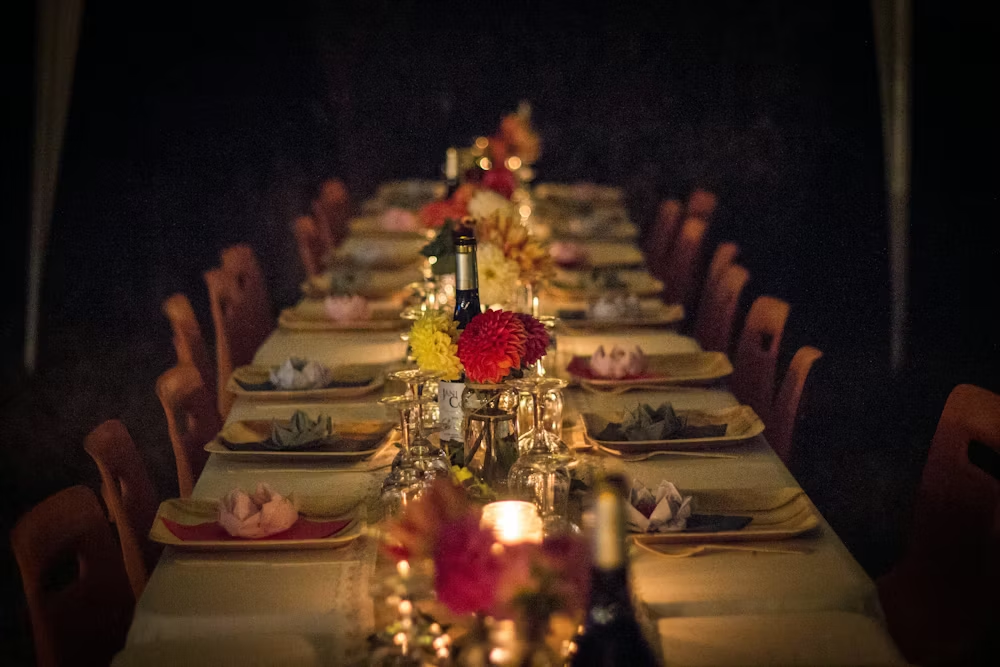
The restaurant was exactly what I expected: understated luxury designed to communicate wealth without appearing to try too hard. Servers moved with synchronized precision. The wine list probably had its own security detail. The lighting was dim enough to be flattering and bright enough to see clearly—the perfect balance for a place where people made important decisions and wanted to appear thoughtful while doing so.
My family was already there when I arrived. Preston glowed with the particular brightness of someone on the precipice of success. Melissa looked sharp in the way women married to ambitious men learn to look. My parents were dressed like they were attending a state dinner, my father wearing a suit that cost more than my first month’s salary, my mother draped in pearls that had been in the family since her mother’s generation.
My mother kissed both my cheeks. “You made it,” she said, genuinely pleased. “And you look lovely. Is that dress new?”
“New to me,” I said.
“Come,” she said. “Let me introduce you around.”
The next hour was a masterclass in social torture—my family performing their lives like a play they’d rehearsed countless times. Preston worked the room with the polish of someone who’d spent years learning which handshake conveyed genuine interest and which conveyed strategic calculation. My parents name-dropped casually, mentioning connections and summer homes as if they were natural conversational waypoints. Melissa talked about private schools and vacation homes in Jackson Hole like those were the only subjects worth discussing.
I was introduced as Preston’s sister. Or occasionally, when my mother remembered her manners, as “our daughter Kaylee.” No one asked what I did. When they spoke to me at all, it was to compliment my appearance or inquire where I lived. When I mentioned Virginia, they nodded politely and moved on, their attention returning to more interesting conversations.
I was furniture. Decorative. Appropriate. Forgettable.
Then the dinner began, and Keith Bington gave a speech about the firm’s future, about growth and innovation, about Preston’s particular contributions to their success. Preston glowed harder, absorbing the praise like it was oxygen. My parents glowed in reflection, proud of their son’s achievement in a way they’d never quite managed to be proud of me. Even Melissa looked satisfied, basking in the glow of her husband’s ascendance.
Then Bington turned down the table, his gaze landing on me with the kind of focus that suggested I’d somehow become interesting to him.
“Preston tells me you have a sister,” he said. “I don’t believe we’ve met.”
All eyes turned toward me—the sister who’d been dismissed, the one they’d all agreed wasn’t quite successful enough to matter.
“Kaylee,” I said, extending my hand. “Nice to meet you, Mr. Bington.”
“Keith,” he corrected, shaking my hand with the kind of grip that suggested military background. “What do you do, Kaylee?”
The question hung in the air like a test.
I saw my mother’s face tighten. I watched Preston’s smile go rigid. I saw my father reach for his wine glass like it was an anchor to his comfort.
“I work for the government,” I said lightly, my voice level. “Security-related work. Terribly boring, honestly.”
Bington nodded politely. “What agency?”
“Defense,” I said simply.
My father cleared his throat—that particular throat-clearing that had preceded decades of gentle dismissals.
“Kaylee’s had a varied career path,” he said, his voice sliding into that familiar tone of disappointment dressed up as cheer. “Still finding her niche. Not everyone’s meant for the corporate world. She’s more of a free spirit—does odd jobs, helps people out.”
“That’s not—” I began, but my mother interrupted.
“She pet-sits,” she added brightly, as if this were somehow charming or endearing rather than deliberately humiliating. “Goes to houses, feeds the cats, scoops litter boxes. Very hands-on work.”
The silence that followed was exquisite—the specific silence that happens when someone has said something so undermining that the room itself seems to hold its breath.
Bington’s phone lit up on the table beside his plate. He glanced down, frowned, then picked it up. I watched as his face transformed—shock bleeding into recognition, recognition bleeding into something that looked almost like respect mixed with concern.
He stood abruptly, his chair scraping against the marble floor with a sound like punctuation.
Every head at the table turned.
“Major,” he said, his voice snapping into military precision. Then softer, almost apologetic: “I didn’t recognize you without your uniform.”
The world stopped rotating.
My father’s hand froze mid-air, hovering over his wine glass. My mother’s eyes went wide. Preston’s face drained of all color.
“Colonel Bington,” I corrected, standing as well, “retired, I assume?”
He nodded. “I served with General Morrison at Camp Pendleton. He just texted me.” He paused, letting the implications settle. “Said his daughter is handling our Syria briefing this week and that I should personally thank you for pushing it back for family obligations.”
He hesitated, his gaze briefly catching Preston’s before returning to me.
“And he said you’re running Sentinel Dawn.”
The junior partner sitting beside me looked like he’d forgotten how to breathe entirely.
I kept my voice calm despite the magnitude of what was happening. “That’s correct, sir.”
Bington turned slightly, addressing the entire table like a instructor correcting a classroom that had fundamentally misunderstood the assignment.
“Major Radford is running one of the most critical counterterrorism initiatives currently operating in the Middle East,” he said, his tone carrying absolute authority. “She commands a unit coordinating joint operations with allied intelligence services. She has briefed the Secretary of Defense. Twice.”
He gave a thin smile that wasn’t really a smile.
“So perhaps not quite the same as scooping litter boxes.”
The Confrontation at Home
My father’s wine glass slipped from his fingers. It struck the plate with a sharp crack, and red wine spread across the white tablecloth like a wound.
My mother clutched her pearls. “Nineteen years,” she whispered, her voice barely audible. “You’ve been… nineteen years?”
“I told you,” I said quietly, my voice steady despite the anger building beneath the surface. “You just decided not to listen.”
After the glass cracked, after Bington had made his statement and the dinner continued in an atmosphere of profound discomfort, I didn’t stay long. I excused myself politely, said I needed to return to Virginia early the next morning for a briefing, and left while my family was still trying to process the complete reorientation of their understanding.
On the train back, I sat by the window and watched the darkness blur past. My dress uniform was folded in the garment bag above my seat. I hadn’t needed it in the end—Bington’s text message had served as a better introduction than any amount of ribbons and insignia.
By the time I stepped off the train in Union Station, my phone had accumulated three missed calls from my mother and one voicemail from my father. I didn’t listen to them immediately.
I wasn’t ready to hear their version of apology yet. I wasn’t prepared to watch them try to make my truth fit into their comfort zone.
The Process of Being Heard
Operation Sentinel Dawn required my complete attention for the next ten days. I lived on caffeine and encrypted calls. My phone stayed on silent except for secure lines. My family existed as a distant buzz I was determined not to engage with until the immediate mission phase had stabilized into something manageable.
Only when the initial operations were fully underway did I finally sit in my office, close the door, and listen to the voicemails.
My mother’s came first, her voice raw in a way I’d rarely heard.
“Kaylee, please. I don’t know what to say. We didn’t understand. We thought… we just thought… Please call me.”
My father’s voicemail was shorter, which was more honest for him.
“Kaylee. Call me.”
No apology. No acknowledgement. Just a demand disguised as a request.
Preston texted daily, sometimes with long messages, sometimes with short ones.
I’m sorry. Can we talk? I feel sick about it. Mom’s devastated. Dad won’t stop pacing. Please.
I didn’t respond immediately to any of them. Not because I was punishing them, but because I needed to decide what continued contact would actually cost me emotionally and professionally.
Two weeks after Cristallo, I got an email from Bington—not on corporate letterhead, just a simple message from a personal address.
He wrote:
Major Radford,
I hope I’m not overstepping. I want you to know I corrected something at the firm today. People repeated the litter-box comment as if it were amusing. I made sure they understood it was not. I also told Preston, privately, that respect is not conditional on titles. He didn’t look like a man who’d previously learned that lesson.
If you ever need anything from me professionally, you have it.
Semper Fi, Keith Bington
I stared at the message longer than I expected. There was something almost absurd about it—my brother’s CEO showing more respect in one email than my family had shown me in nineteen years. But maybe it wasn’t absurd. Maybe it was simply true: strangers can see what family refuses to see because strangers don’t benefit from your erasure.
Building New Boundaries
That night, I finally replied to Preston.
One message: I’m available to talk Saturday at 2 p.m. at the coffee shop near Union Station. One hour. No parents. No Melissa.
He replied instantly: Yes. Thank you.
Saturday came cold and bright. I wore jeans and a coat—no uniform, no visible armor except the kind I’d built from decades of service.
Preston was already there when I arrived, sitting at a corner table with a coffee he wasn’t drinking. He stood quickly when he saw me, eyes red-rimmed, looking like a child who’d lost something important and didn’t know how to ask for it back.
“Kaylee,” he said, immediately correcting himself. “Kay… no, Kaylee. I’m sorry.”
“Kaylee,” I corrected gently, sitting down. “Not Kay.”
He nodded, swallowing with difficulty. “Okay.”
We sat in silence for a few seconds. Preston’s hands trembled slightly when he lifted them.
“I didn’t know,” he said finally, his voice rough.
“You didn’t want to know,” I said, not unkindly. “There’s a difference.”
He flinched like I’d slapped him, but he didn’t argue or make excuses.
“I think I thought…” He stopped, searching for honesty. “I think I thought you’d come back from the Marines. That you’d get it out of your system eventually. And when you didn’t, I just made you smaller in my mind so it wouldn’t feel like I was wrong about you.”
There it was. Not pretty. Not heroic. Real.
“You made me a punchline,” I said calmly.
His eyes filled with tears. “I hate myself for it.”
“Don’t,” I said, surprising both of us. “Self-hatred is just another way of making this about you. Real accountability is harder.”
I explained what I needed from him—no excuses, no revisionist narratives, no allowing our parents to diminish what had happened. I needed him to speak the truth plainly, without the softening language that families use to protect each other from consequences.
Preston nodded, earnest and broken. “I will.”
When the hour ended, I stood. Preston stood too, his hands open like he wanted to hug me, then thought better of it. That restraint was progress.
The Mother’s Apology
My mother requested a meeting a week later. Not a phone call filled with tears. An email, unusually direct.
Kaylee,
If you are willing, I would like to meet you. Alone. No your father, no Preston, no Melissa. I will come to Virginia or wherever you choose. I understand if you say no.
Mom
The last line caught me: I understand if you say no.
That sentence was new for her.
I replied with a location and time: a quiet café near my base, Tuesday at 6 p.m.
She arrived early, sitting stiffly at a small table, hands wrapped around tea she didn’t drink. She wore a coat that looked expensive but slightly too formal for a casual café. My mother had never quite learned how to dress for anything that didn’t involve being observed.
When she saw me, she stood quickly, eyes shining with the particular shine of tears held back by sheer willpower.
“I’m sorry,” she said immediately.
I waited.
My mother’s eyes fluttered as she searched for words.
“I didn’t listen,” she said. “And I didn’t want to listen. Because if you were successful in a way I didn’t understand, in a way I couldn’t explain to my friends… then what did that say about me? About what I valued?”
That was closer to truth than I’d ever heard from her.
“You wanted proof,” I said softly.
She blinked. “What?”
“The wine glasses,” I said. “The pearls. The newsletters. You wanted proof you mattered.”
Her mouth trembled. “Yes,” she whispered. “And you… you mattered in a way that didn’t fit my cabinet.”
The phrase was awkward, but the honesty behind it was real and genuine.
“I let your father and your brother tell stories about you,” she continued. “And I repeated them because it was easier than admitting I didn’t know my own daughter.”
I stared at her for a long moment, letting the words settle.
“I thought you were a failure,” she said, and the confession hit the table like a heavy object being set down. “And I treated you like one. I’m ashamed.”
Good, I thought—not cruelly, but with the understanding that shame is sometimes the first honest feeling a person experiences.
“What do you want?” I asked.
My mother’s eyes widened. “A chance,” she said. “Not to erase what I did. Just to know you. If you’ll let me.”
The Father’s Reckoning
My father didn’t call. He sent a letter on thick stationary, the kind he used for holiday cards and professional thank-yous.
Kaylee,
I owe you an apology. I failed as a father. I dismissed what I didn’t understand and made jokes that were deliberately cruel. I am sorry.
If you are willing, I would like to meet and listen.
Dad
I read it twice.
It was almost good, but something was missing—acknowledgement of the public humiliation, the deliberate story he’d told other people, the way he’d used my supposed failure to position himself as a man who at least raised one successful child.
I wrote back one sentence, short and clear:
When you are ready to acknowledge what you said about me to other people and why you said it, we can talk.
Two days later, Preston texted:
He’s furious. But he’s thinking.
Good, I thought. Let him think.
Because my family’s particular failure—what they’d avoided for nineteen years—was the simple act of sitting in discomfort without trying to smooth it away or turn it into a joke or rewrite it into something less painful.
For the first time, they didn’t have that choice.
The Gathering
In January, Preston invited me to his house in Brooklyn for dinner. Not a work event. Not a performance for colleagues. Just dinner with family.
I said yes.
I arrived in civilian clothes, jeans and a simple sweater. Preston opened the door and looked nervous, like a man waiting for an inspection.
“Hey,” he said.
“Hey,” I replied.
Inside, his kids were louder than I remembered, running past me like I was just another adult. Melissa offered wine. I declined. She offered sparkling water instead without making it weird. Progress.
My parents arrived twenty minutes later.
My mother looked at me carefully, like she wasn’t sure what version of me would show up. My father carried a small bag—dessert, probably—and hovered near the doorway like he didn’t trust himself in this space.
We sat at Preston’s dining table and ate pasta that Melissa had clearly practiced making. The kids asked me questions, blunt in the way only children can be.
“Are you really in the Marines?” Preston’s son asked, eyes wide with genuine curiosity.
Preston inhaled sharply, like he expected the question to become a weapon.
My mother’s hands tightened around her fork.
“Yes,” I said, keeping my voice calm. “I am.”
“What do you do?” his daughter asked.
“I help keep people safe,” I answered.
The kids accepted it like it was normal, then ran off to argue about a video game.
The adults sat in a silence that wasn’t hostile, just uncertain—like people learning new rules for existing together.
After dinner, Preston’s kids showed me their violin practice. They were terrible, which made me laugh more than I expected. My mother watched me laugh like she’d forgotten that I could.
Later, in the kitchen while Melissa packed leftovers, my father approached me quietly.
“I told Bington,” he said.
I looked at him.
“I told him I lied. I told him why I lied. He didn’t say much, but he looked at me like he was disappointed.”
Good, I thought.
My father exhaled shakily. “I deserved that.”
“Yes,” I said.
“I’m going to keep correcting it,” he said. “Everywhere I told the story.”
The New Normal
That night, back in my townhouse, I took off my civilian clothes and hung them in the closet next to my uniform. I sat on the edge of my bed and stared at my reflection in the window.
The past nineteen years couldn’t be erased. The humiliation, the dismissal, the years of being treated as a family liability—those had happened. My family couldn’t undo them by finally acknowledging the truth.
But they could stop perpetuating the lie.
And for the first time, it seemed they actually wanted to.
What do you think about Kaylee’s decision to finally reveal her truth to her family? We’d love to hear your thoughts in the comments below or come share your reaction on our Facebook page. If this story resonated with you—if it reminded you about the importance of listening to the people you love, the cost of judgment without understanding, or the slow, difficult work of building real relationships—please share it with friends and family. These are the stories we need to tell, the ones that remind us that sometimes the people closest to us are the ones we see least clearly.